Choosing marble mosaic: pattern, mesh and grout

Marble mosaic is chosen by assessing the shape of the pieces, the overall pattern, the grout colour and the area of use together. A single sheet is a useful start; to understand how the repeat will look over a large surface, several sheets need to be examined side by side. Using small pieces does not make a mosaic automatically suitable for every area of use.
Look at the repeating whole, not the single piece
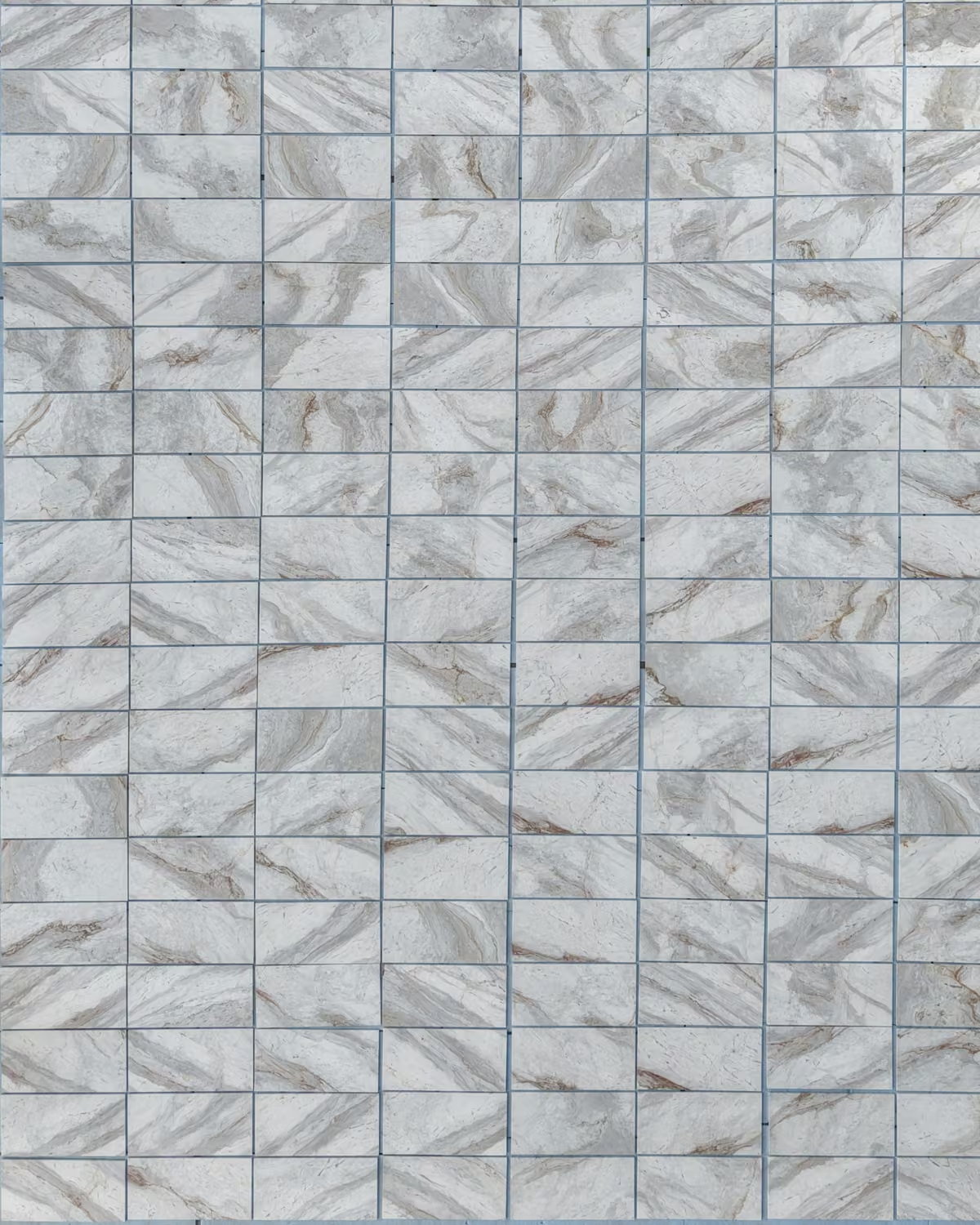
Hexagonal, square or long rectangular pieces create different rhythms. The most noticeable form of the pattern sometimes appears not within a single sheet but where the sheets meet. So bring several samples together side by side. Do the sheet edges catch the eye, are the vein directions consistent, is the tonal distribution what you expected? Give visual approval on that whole.
Grout colour is a design decision of its own
A grout colour close to the stone can make the composition read more calmly; a contrasting colour can bring out the geometry of the small pieces. Rather than guessing the effect from a colour chart, see it on an approved sample. The grout's compatibility with the stone, the application method and its suitability for the area of use should be confirmed separately from the product information. A trial panel makes the colour decision concrete.
Ask about the system behind the mesh
The mesh and the bonding that hold the pieces together must suit the area of use. In wet areas especially, knowing the type of marble is not enough. Get usage information for the whole product from the supplier. The back of the sheet should be part of what the installation team assesses. Two mosaics that look the same can come with different backing systems.
Cut edges can change the pattern
Show on the drawing how the pattern will end at corners, niches and around the drain. On a mosaic covering a whole wall, the starting line affects how the pieces at the opposite edge look. Centring on the basin and starting from the exact middle of the wall may not give the same result. Think about the architectural focus and the cutting layout together.
Do not infer floor suitability from appearance
Many small pieces and joints are not, on their own, proof of slip safety. Performance and the installation system must be assessed for the relevant conditions of use. Do not take a sample approved for a wall to a shower floor without checking. In maintenance too, consider the instructions for the stone, the grout and the products used together.
When assessing a mosaic option with Mabella, share the area of use, the pattern scale and the grout look you are aiming for. Have the product's available sizes, mesh and technical scope confirmed, and make the decision on a sample panel.
Frequently asked questions
Does one sheet show what the whole wall will look like?
To understand the repeat and the sheet edges, seeing several sheets together is more informative.
Can the grout colour be chosen later?
Technically the process can vary; but because it shapes the look, it is worth choosing it together with the stone, on a sample panel.