From blockto slab.From slabto character.
Mabella works marble blocks into slabs and project-specific sizes at its plant in Afyonkarahisar, and offers six finishes to suit the surface you choose.

Every blockdifferent.Every surfacedeliberate.
We treat the stone’s veining, dimensions and surface as parts of one and the same production decision.
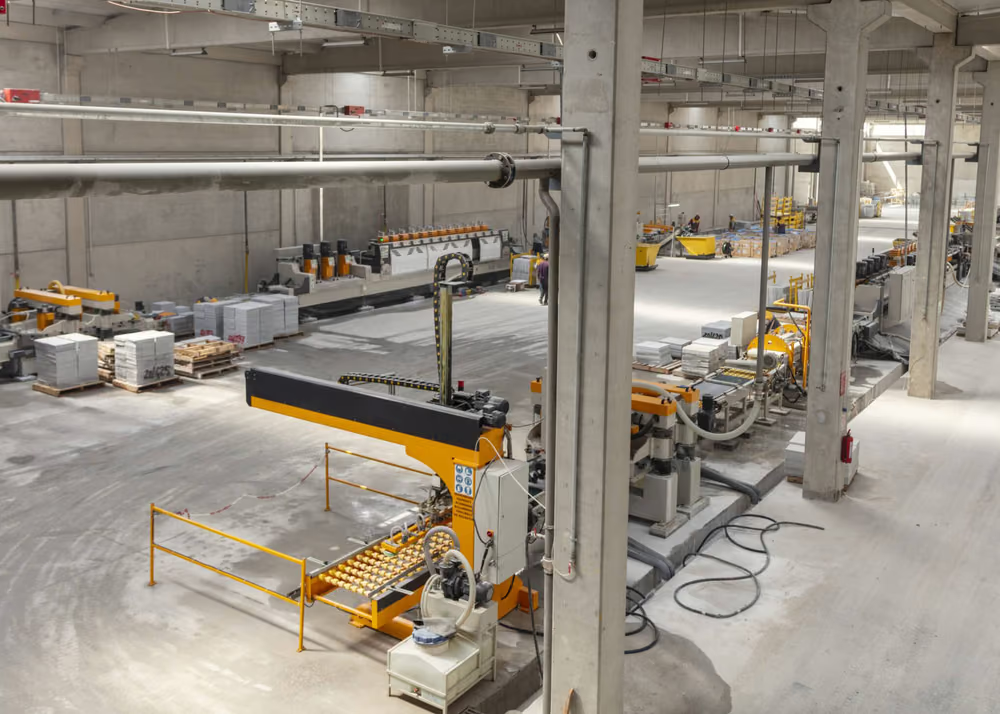
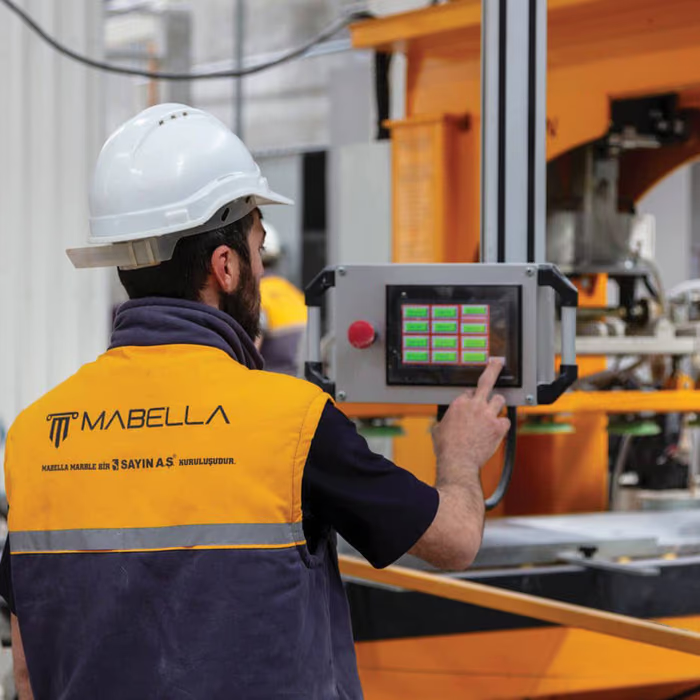
At our plant in Afyonkarahisar, block cutting, slab processing, sizing and surface finishing are planned as one production flow. The aim is to turn the material, size and appearance requirements of architectural projects into workable production details.
What have we done?
We describe the scale of production not with capacity claims but with the figures actually achieved in the period stated.
- Total site area
- 14,057 m²
- 5,384 m² indoor + 8,673 m² outdoor
- Production in 2025
- 120,000 m²
- Marble produced in the year
- Export shipments in 2025
- 120
- Containers
- Imported blocks processed in 2025
- 3,974 t
- Blocks processed in the year
How is stone from the quarry
made ready
for a project?
From the raw material’s arrival on site to the labelled crate, every stage depends on the one before.

Reading the block
The first decision is made in the block yard. The dimensions, the structure of the stone and the direction of the veins are assessed; the cutting plan follows from them.
Cutting and sizing
Marble blocks are turned into slabs. The product sizes required are prepared according to the project drawings and what production allows.
Defining the surface
From polish to pronounced relief, the option suited to the type of stone and the intended use is chosen among six surface finishes.
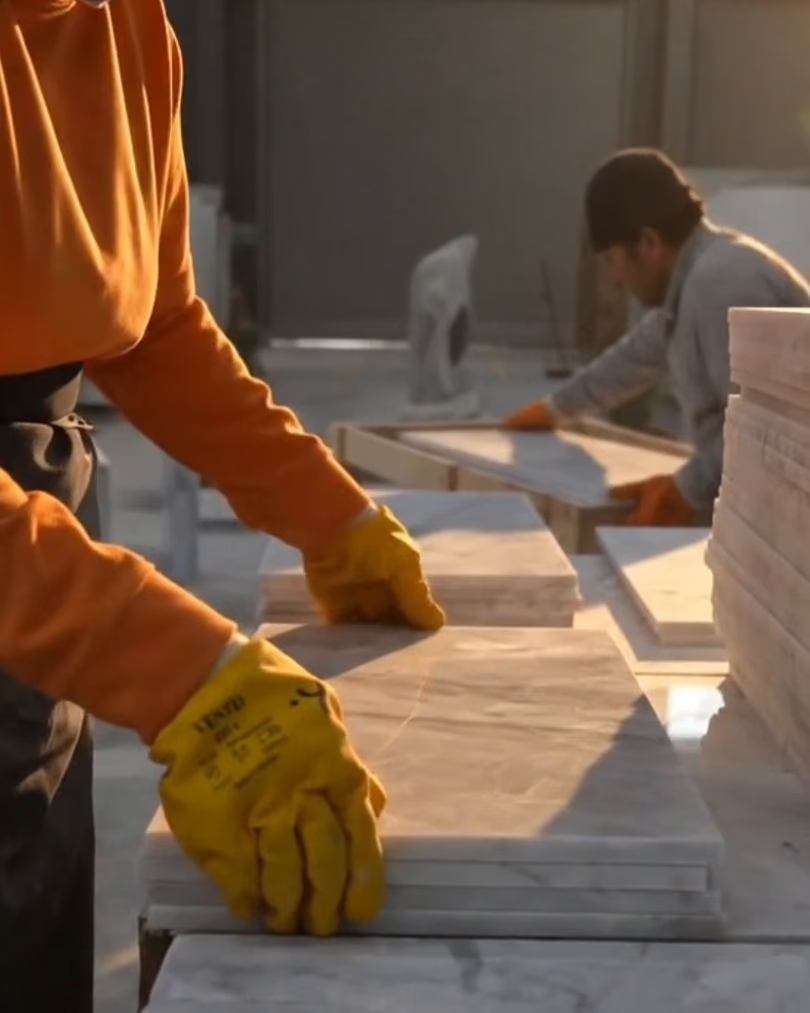
Checking and packing
The finished products are checked against the size and surface requirements, then sorted and packed for shipment.
One stone. Six surfaces.
The same stone carries light and texture differently on each surface. Compare the six finishes, and base the application decision on real samples and technical data.
Polished
High gloss, strong reflection. Polishing gives the stone a smooth finish that reflects light more directly. Vein patterns and colour transitions read more clearly.
Possible use in designAccent surfaces and reflective design details indoors.
Honed / Matt
Low sheen, soft appearance. Honing flattens the surface without polishing it; light is diffused rather than reflected. Veins and colour transitions read more calmly.
Possible use in designIndoor floors and large surfaces where a calm, matt look is wanted.
Brushed
Light texture, silky matt look. Brushing takes the softer layers off the surface, leaving a faint texture to the hand and an aged appearance.
Possible use in designFloors and wall claddings where the texture should be felt.
Sandblasted and brushed
A pronounced but softened texture. The rough surface opened by sandblasting is softened by brushing; the texture is felt but not sharp.
Possible use in designFloors and wall surfaces where a textured look and a soft touch are wanted together.
Sandblasted
A matt, rough surface. Pressurised sandblasting gives the surface a fine, even roughness; the colour lightens and the veins recede.
Possible use in designFloors and façade details where a textured, matt look is wanted.
Bush-hammered
Pronounced relief, strong texture. The hammer’s points open small pits in the surface; the stone carries light in a scattered, deep way.
Possible use in designFloors, steps and landscape details where a strong texture is wanted.
The surface is not a detail.
It is a design decision.
A surface finish changes more than the look; it also changes how the material relates to light, to touch and to the conditions of use.
The last frameof production.
The final stage of an order is the product, labelled and prepared for transport.
Marble that has been cut and finished is sorted by order and packed. This video shows Mabella’s real shipment preparation; the process rests on the site operation itself.
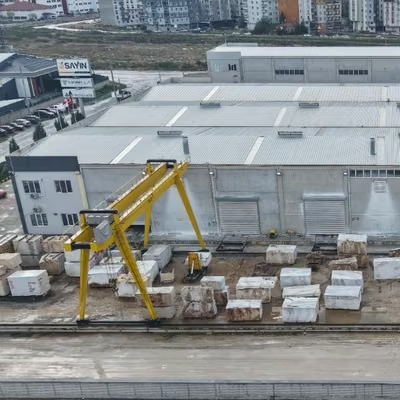
Our production site


Before
you ask,
let us
tell you.
Where is the Mabella Marble production plant?
Our plant is in Afyonkarahisar. Of the 14,057 m² site, 5,384 m² is indoor and 8,673 m² outdoor.
Which marble surface finishes are offered?
We offer six surface finishes: polished, honed (matt), brushed, sandblasted, bush-hammered, and sandblasted and brushed. The right option is decided together, according to the type of stone, the area of use and the conditions of the project.
What is the basic difference between polished and honed marble?
The difference is in the light. A polished surface reflects light directly; veins and colour transitions look more pronounced. A honed surface is flattened without polishing, diffuses light and gives a calmer, matt appearance.
Which marble surface should be chosen outdoors?
Outdoors, textured surfaces such as sandblasted, brushed or bush-hammered are usually considered. The final choice should be made according to the type of stone, the climate, the intensity of use and, where necessary, test results such as slip resistance.
Can production be made to a project’s dimensions?
Yes. Slabs and sized products are prepared according to the project drawings and what production allows. Sharing the type of stone, the dimensions, the surface preference and the estimated quantity is enough.