Large-format marble: a guide to size, transport and layout
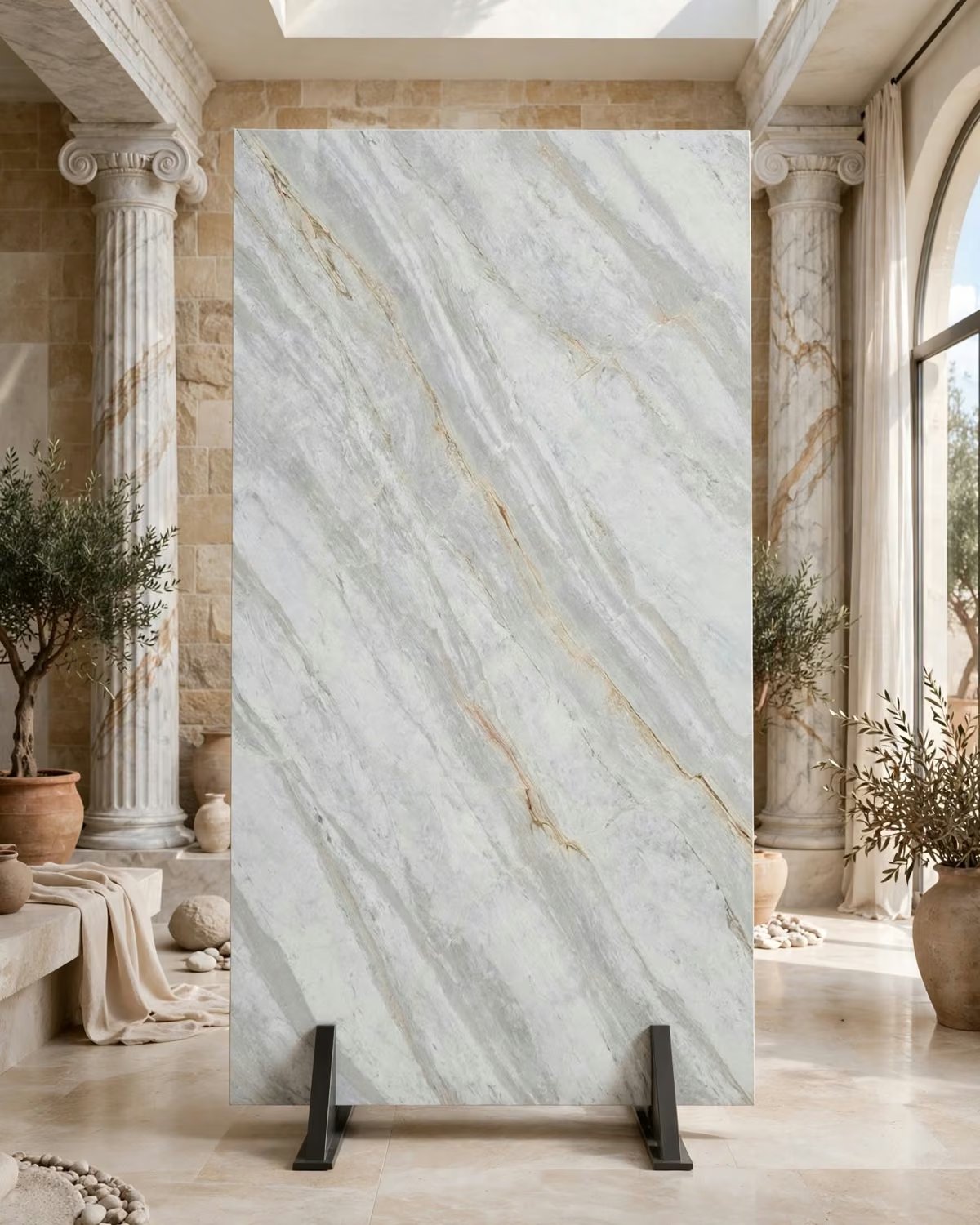
Large-format marble makes it possible to compose large surfaces with fewer pieces and joints. But choosing by the nominal slab size alone is not enough. The usable area, the real cuts, the transport route and the installation system must be confirmed together. The largest slab is not the right slab for every project.
Distinguish slab size from finished piece size
The overall dimensions of a slab do not mean every part of it can be used on the project. Edge trimming, pattern selection and areas that need to be assessed all affect the usable area. Place the finished pieces you want on the real slab photograph. On a wall intended to be a single piece especially, see how doors, niches or corner returns sit within the limits of the slab.
Will it get onto site?
The dimensions of the entrance door, stairs, lift and turning spaces should be checked early. A piece that cannot be brought up to the installation floor causes problems, however well it is designed. The transport and lifting method should be decided by a specialist team. This article does not suggest a method for moving large, heavy stones by hand; it only describes the questions needed for coordination.

Compare the cost of fewer joints properly
Some designs may prefer fewer joints. Ask separately how that affects material use, cutting, packing and installation. Two different size layouts may not have the same total scope. Compare quotations on the processed and installed result rather than only on the visible square metres. Waste should be worked out from the real layout, not taken as a universal percentage.
The substrate and the cladding system are resolved together
As pieces get larger, substrate preparation and installation coordination can matter more. Stone thickness, weight, vertical or horizontal use and support conditions are for the technical team to assess. Adhesives and anchors are not chosen from a photograph. The dimensional tolerances and reference levels against which fabrication will be accepted should also be defined in advance.
Do not confuse a seamless look with a jointless system
Your design goal may be a calm surface, but the joint and movement details the installation needs must be kept. Rather than removing every line, resolve their positions as part of the composition. When vein direction and piece boundaries are reviewed on the same drawing, appearance and installation are better coordinated.
Bring the finished dimensions and the access conditions to your discussion of large-format material with Mabella. Rather than describing the request simply as “jumbo slabs”, write down how many pieces you are aiming for on which surface, so that the options are assessed against a need that can be built.
Frequently asked questions
Is the nominal slab size the same as the finished size?
No. The usable area and cutting losses should be checked on the real slab.
Does a large format lower the total cost?
Not always. Processing, transport and installation scope should be compared together.